Source editing

Source editing

The source editor is a full LaTeX code editor with syntax highlighting, showing the same document as the visual editor.

Where to find it
In the editor
The Visual / Source toggle Top right corner of the editor.
Setting
File › Preferences… › Keybindings Default, Vim, or Emacs.
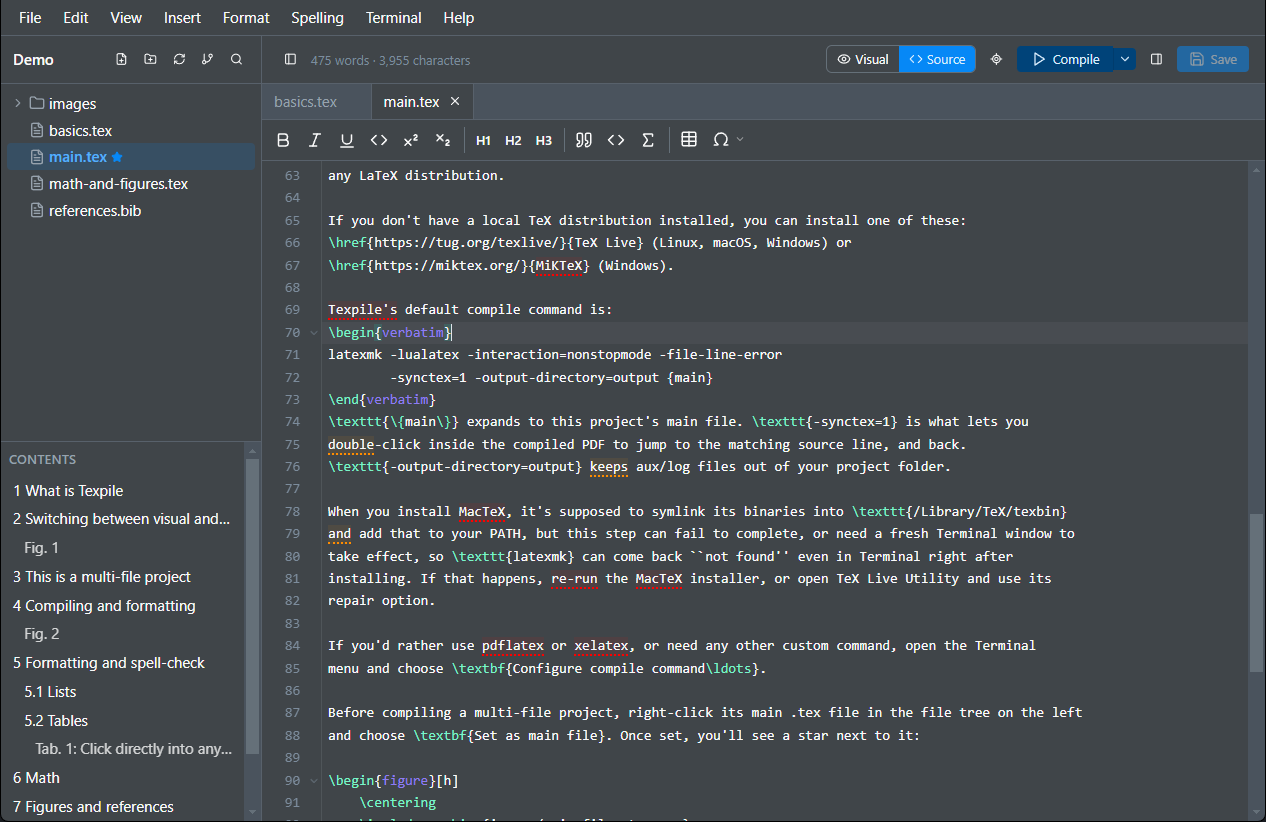
The Visual / Source toggle in the top right corner, with a compile-warning badge beside it
A .tex file open in the source editor with syntax highlighting

Keymaps

Choose default, Vim, or Emacs keybindings in Preferences. The choice applies to the source editor only.

Multiple cursors

Ctrl+Alt+Up and Ctrl+Alt+Down add a cursor above or below. Ctrl+D selects the next occurrence of the current selection, so repeated edits can be made in one pass.

Inline math preview

Equations preview as you write them, rendered with your own macros so a formula built from your definitions still shows correctly. Click away or press Esc to dismiss it, and turn it off entirely from Preferences › Math preview.

Spell check

Runs locally and checks prose only: your commands, math, and comments are skipped.

Shortcuts

The source-specific keys, on top of the ones shared with the rest of the app.

CtrlAlt/Add a cursor above or below
CtrlDSelect the next occurrence
CtrlSpaceOpen suggestions
F12Go to definition (or Ctrl+Click)
EscHide the math preview

On macOS, use Cmd wherever this table says Ctrl.

Toolbar

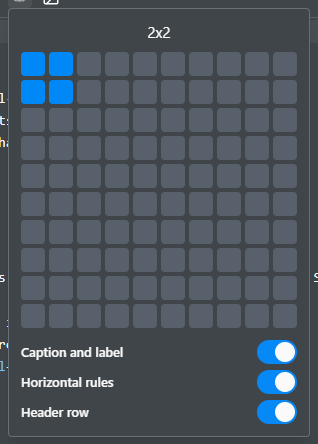
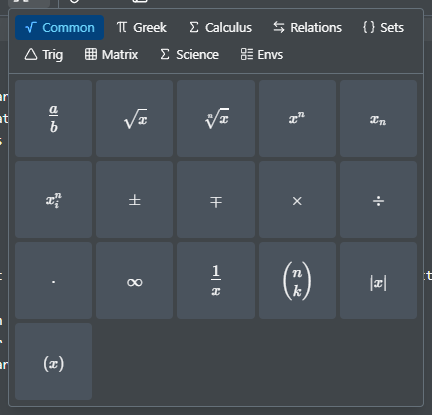
The same formatting commands as buttons, for the chords you don't have memorized. It also inserts a table by size, and math symbols by category (Greek, calculus, relations, sets, matrices), the same way the visual editor's toolbar does.

The source editor's table-insert grid, with caption, rules, and header-row toggles
The source editor's math symbol dropdown, open on the Common tab