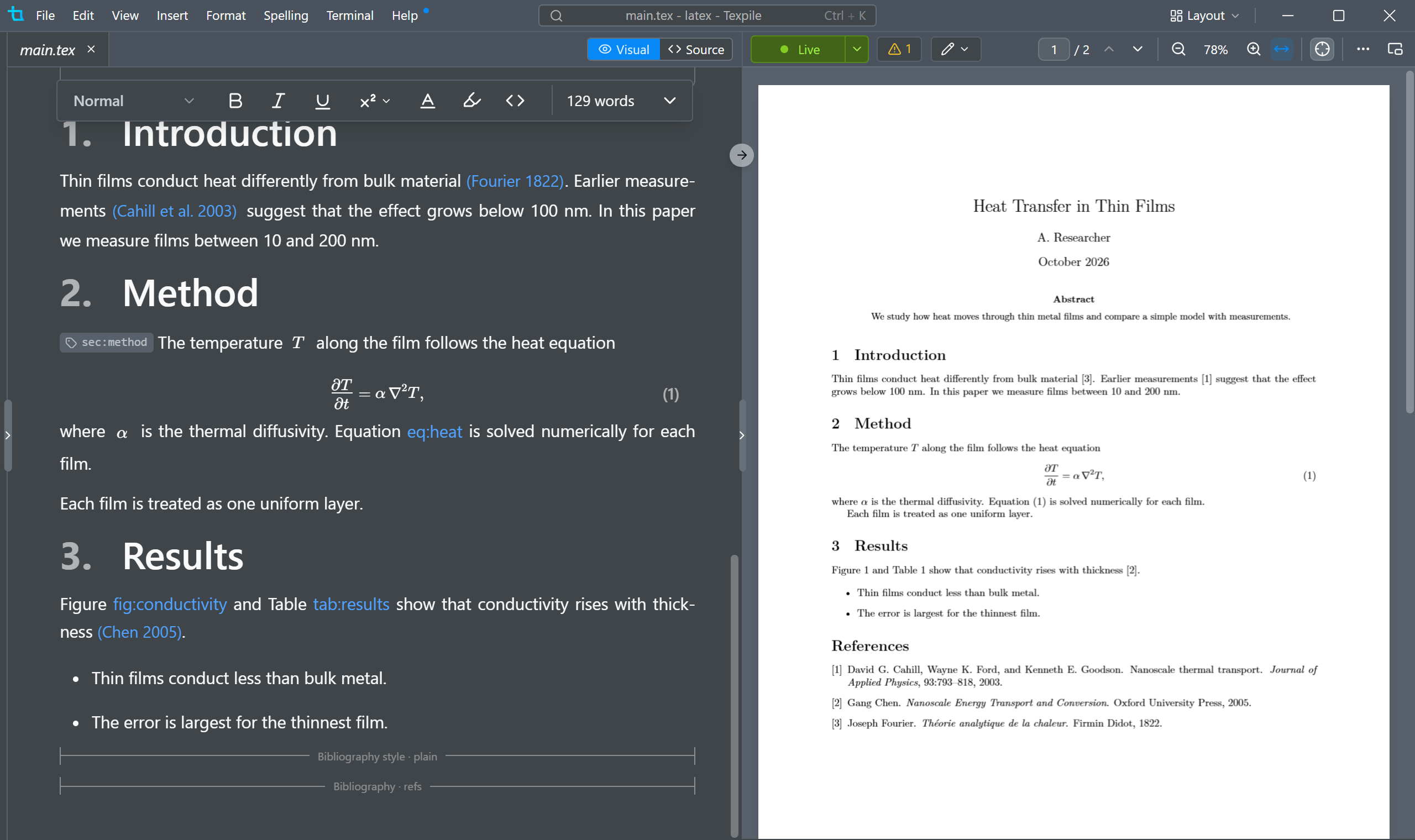

Your document as formatted text, math, and figures
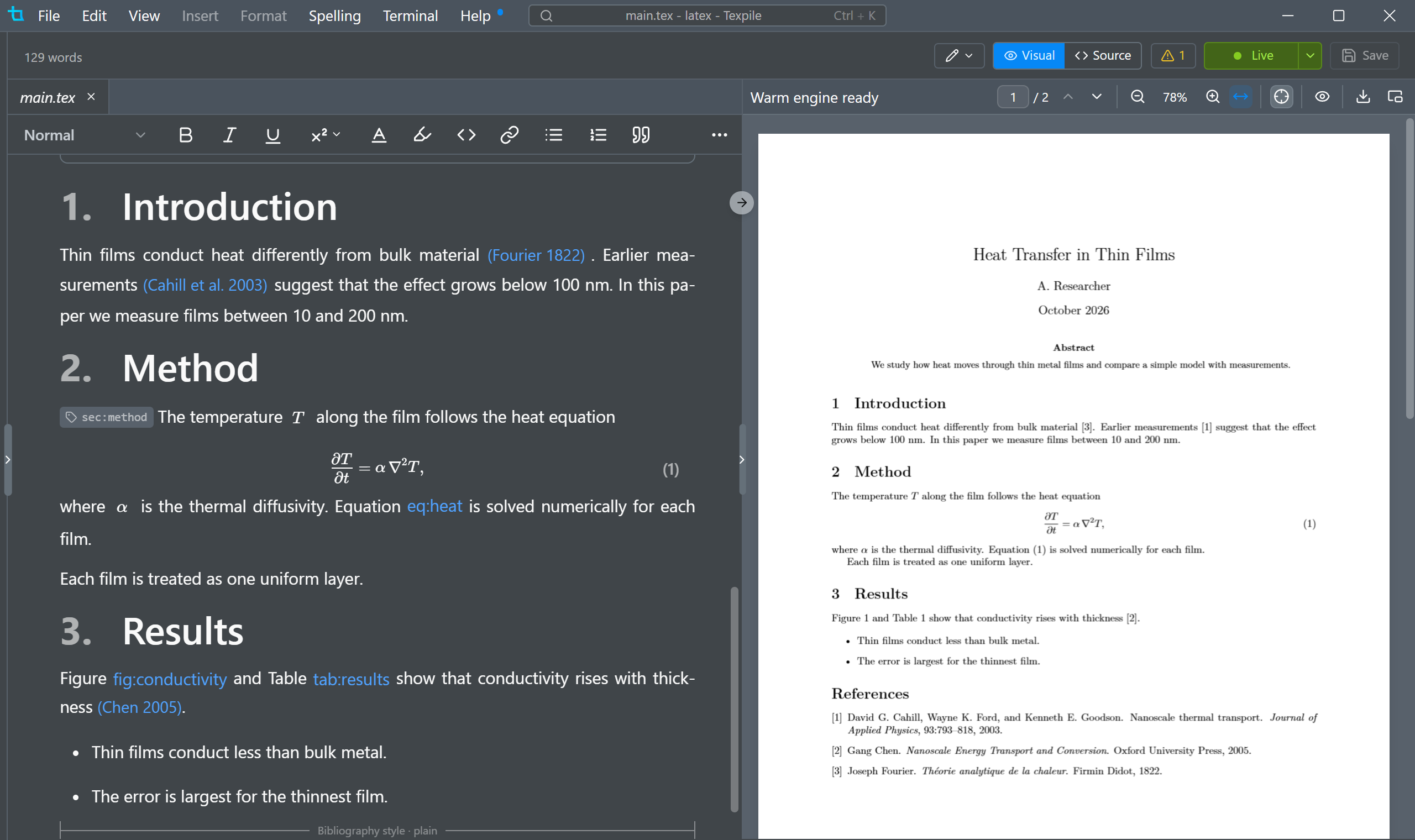
Live preview
The page updates as you type, compiled by your own LaTeX. No manual compile. Math, TikZ, and pgfplots figures render live.
One file, two ways to write it
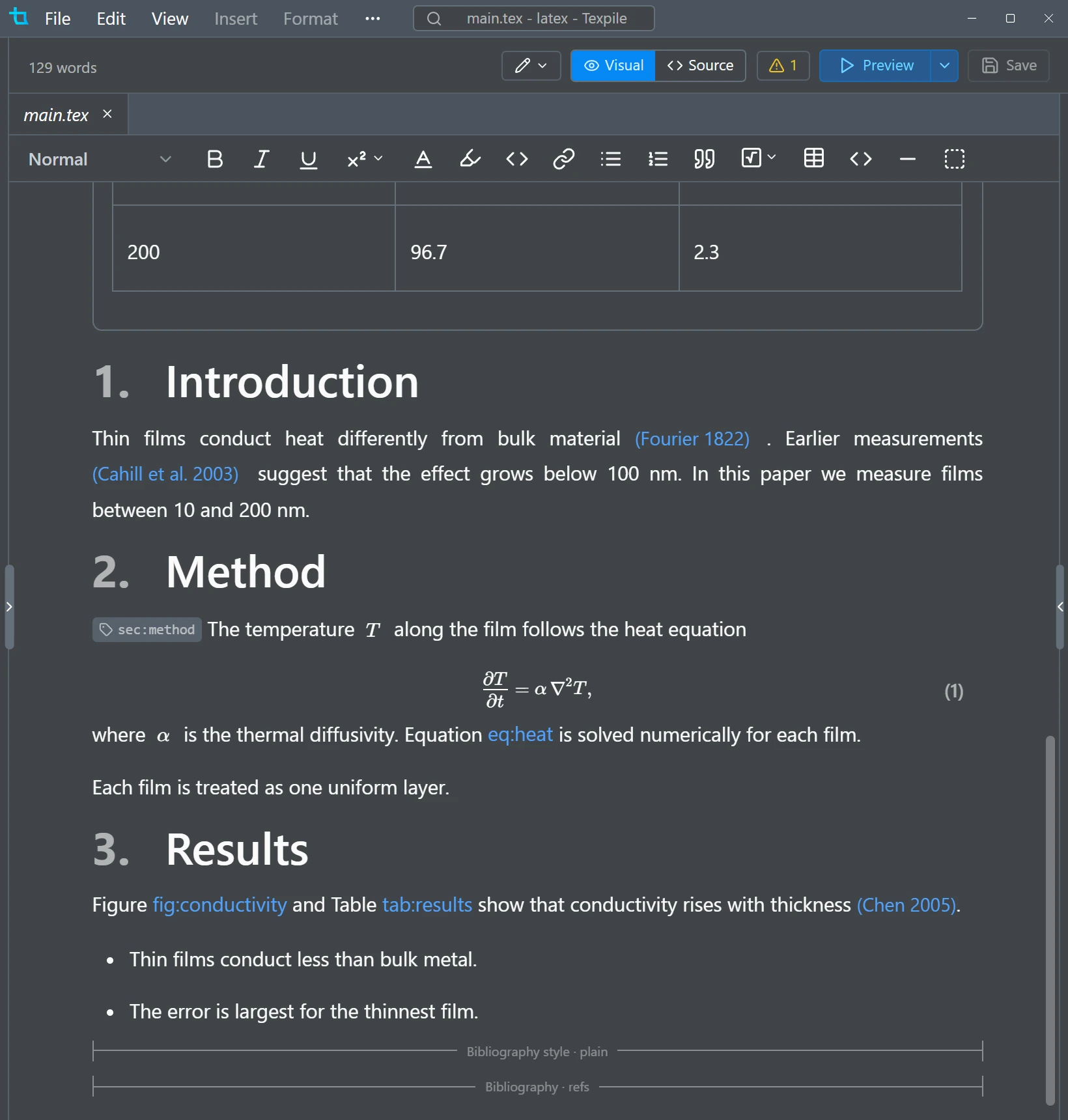
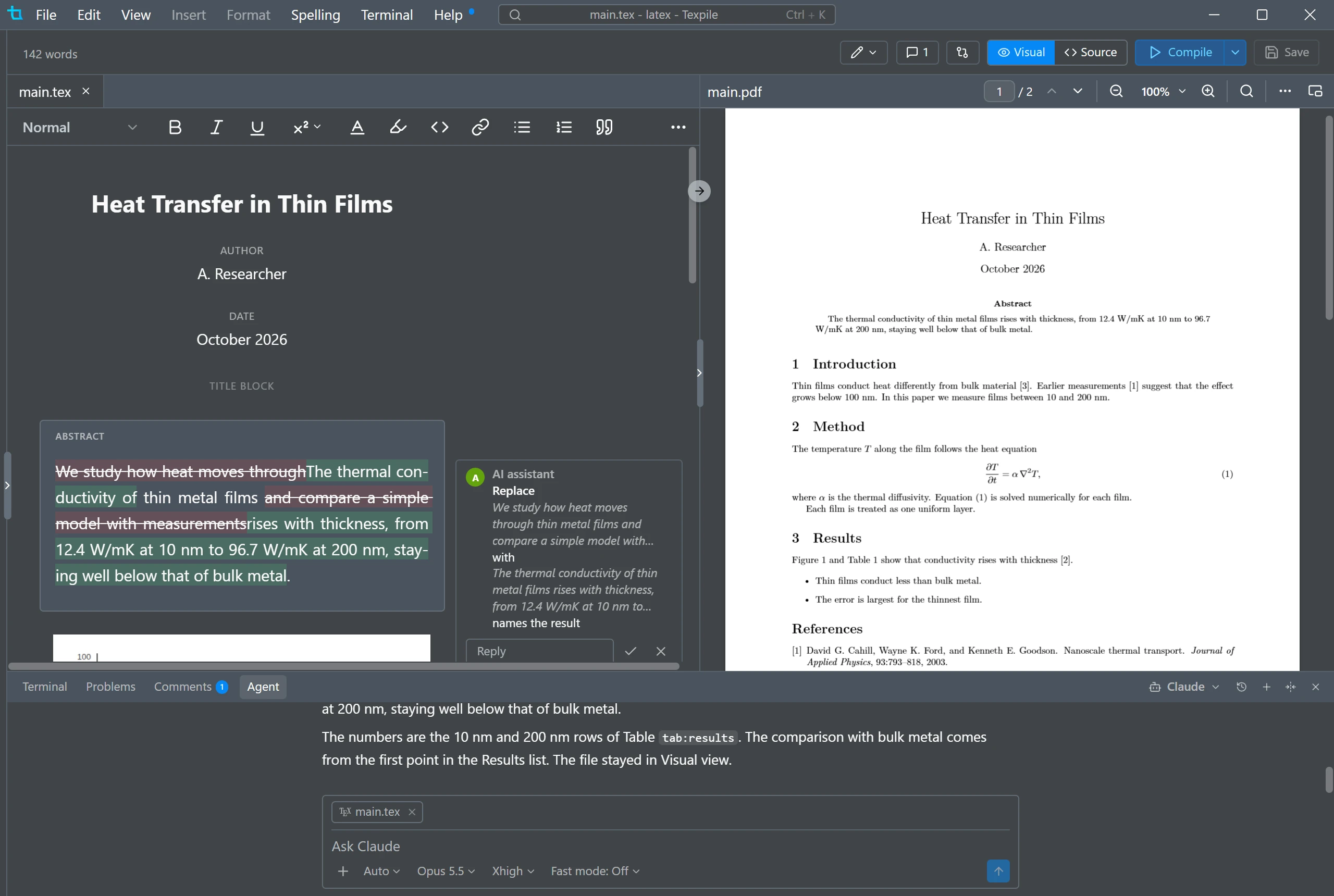
Visual editing
The editor parses your .tex source and renders it as formatted text, math, tables, and figures. Anything it does not model stays as plain LaTeX, untouched.
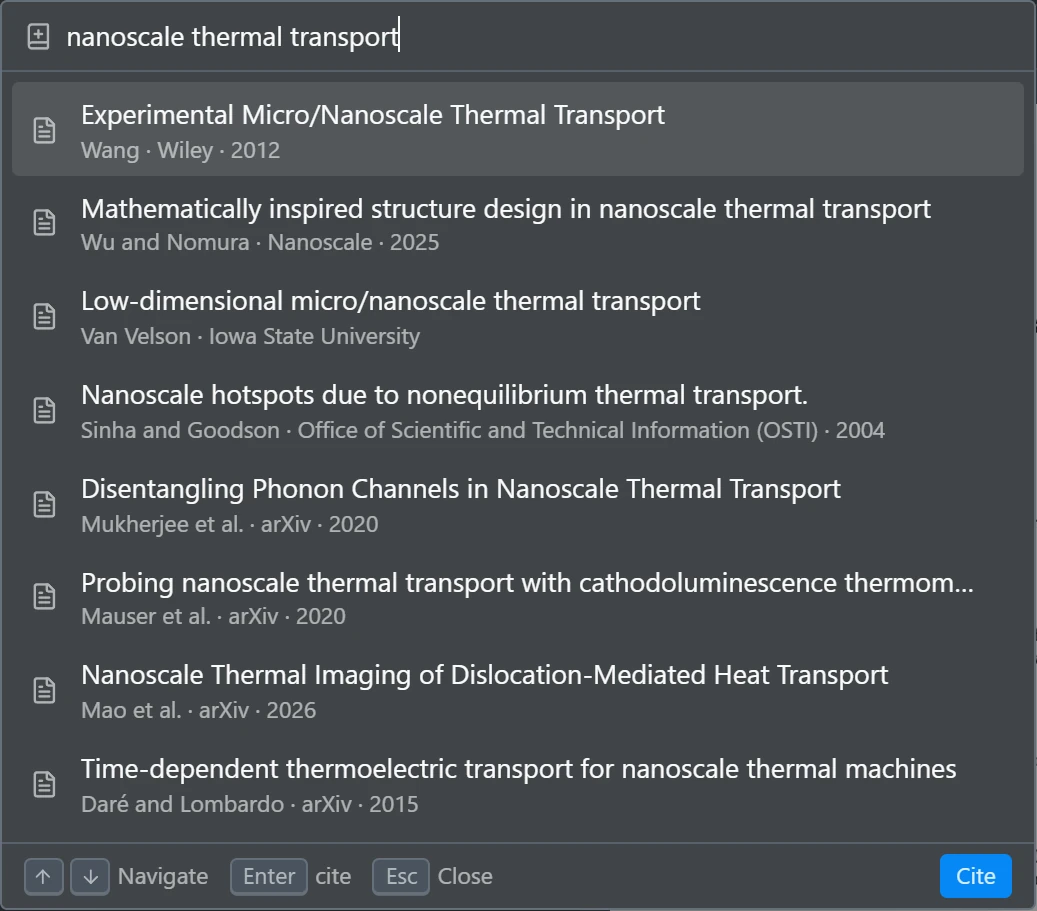
- Type @ to reference any equation, figure, table, or citation.
- Equations render inline and keep their numbering.
- Tables support multirow and multicolumn, edited visually.
- Drag or paste images in, then resize with handles.
- A math toolbar for equations, environments, and labels.
- Spell check skips your commands and math.

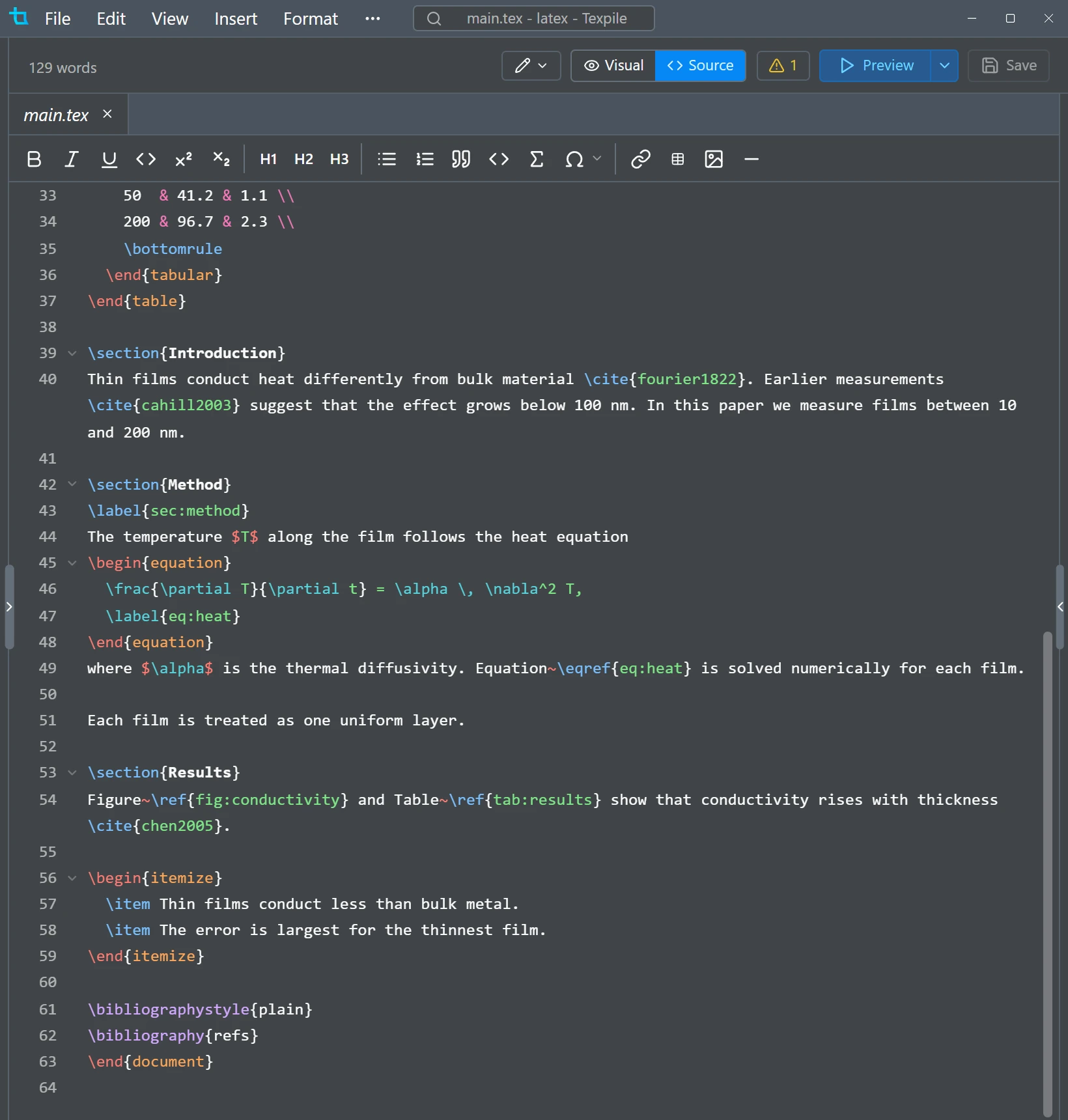
Source editing
A full source editor over the same file, with your whole project parsed for intellisense. Switch to visual and back, keeping scroll, cursor, and undo history.
- Autocomplete for commands, environments, \ref, and \cite.
- File paths complete inside \input and \includegraphics.
- References update when you rename or move a file.
- Your own \newcommand macros are picked up.
- Equations preview live in the source editor.
- Click in the PDF to jump to the source line, and back.
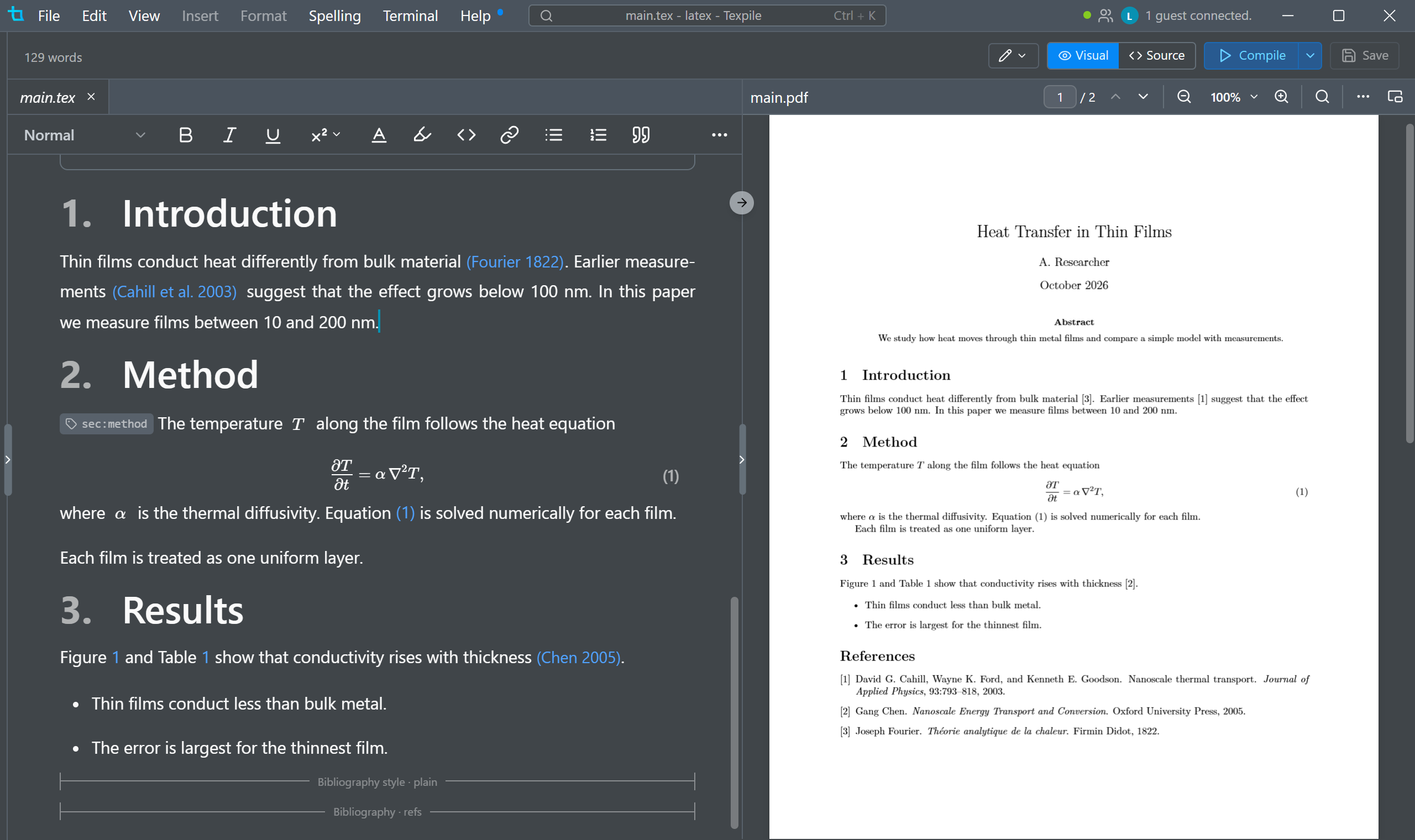
Write together in real time
Share a folder and edit it together in real time. Others join with a code from the home screen and work alongside you, in the visual editor or in source.
- Join with a code, no sign up
- End to end encrypted; the relay only forwards data it cannot read
- See each other's cursors and selections as you type
- You run the compile with your own toolchain; guests see the PDF

More features that didn't get their own section
Built-in terminal
A real shell for latexmk or any compile command.
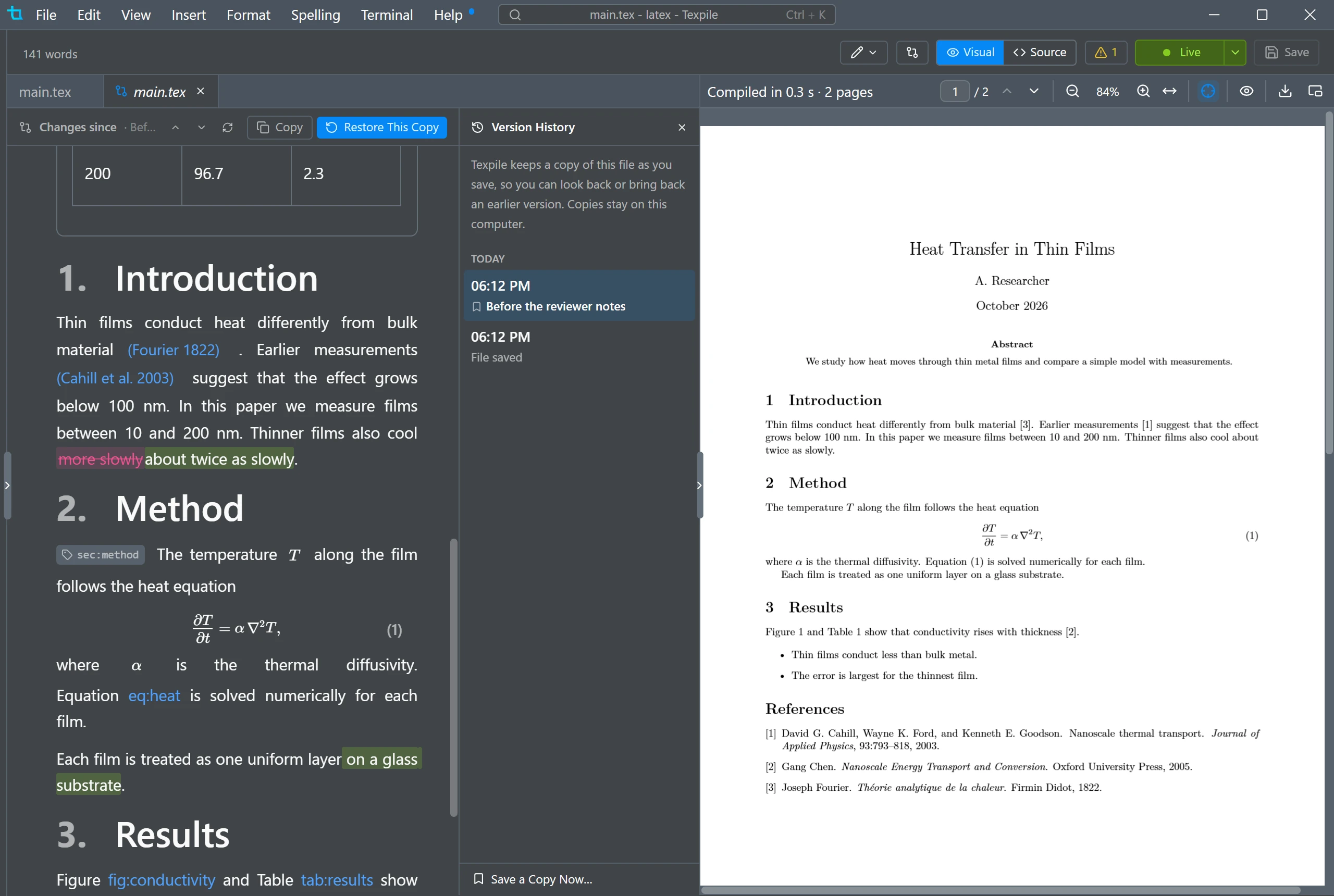
Version history
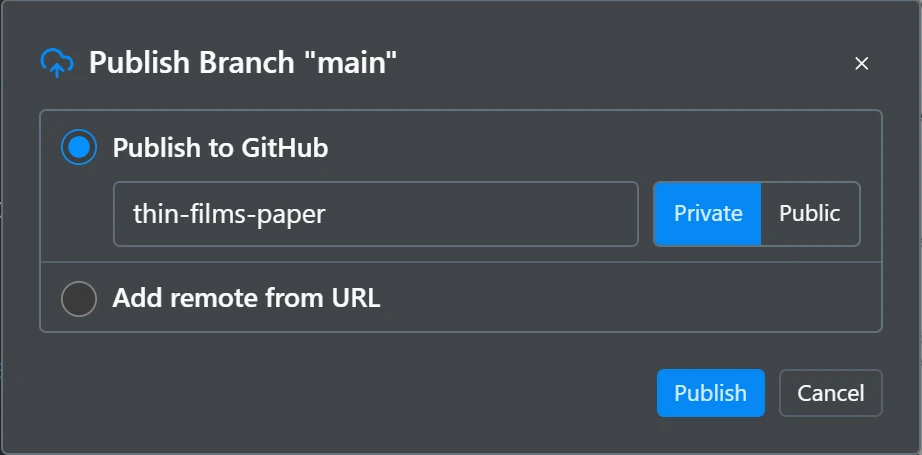
Stage, commit, and diff side-by-side against the last commit.
Multi-file projects
Fragments parse with the main file's macros.
Command palette
Ctrl+K opens a file, compiles, or runs any editor action.
Vim and Emacs
Modal keybindings for the source editor, chosen in Preferences.
Multiple cursors
Add cursors down a column, or select the next occurrence.
Spell check
Checks your prose, skips commands, math, and comments.
MCP
Connect Claude and other AI assistants to the editor.
Tabs and session restore
Reopen a folder and your tabs and cursor come back.
Every feature is documented in full. Read the docs
FAQ
Is it free?
Yes. Texpile is free, and the source code is published on GitHub under AGPL-3.0.
Where do my files live?
On your disk, as plain .tex files. There is no database and no proprietary format: what you save is exactly the LaTeX you would write by hand, and you can stop using the app at any time without losing anything.
Does it need an internet connection?
No. The editor, spell check, compiling, and PDF preview all run locally. Nothing leaves your machine unless you start a shared session, which is end to end encrypted.
Can I work with other people?
Yes, this is experimental. Share a folder for real time editing, and others join with a code. It is end to end encrypted, so the relay server only forwards data it cannot read.
Will it rewrite my LaTeX?
No. The importer preserves every construct it does not understand as raw LaTeX, and saving a document you have not touched reproduces the file byte for byte. Only the specific blocks you edit are regenerated.
Do I need LaTeX installed?
For compiling PDFs, yes: bring your own TeX distribution (TeX Live, MiKTeX, or MacTeX) and Texpile runs it for you. Editing works without one.
Why is it built on Electron?
Texpile started as a web app, and the desktop version is a fork of it. The editor is built on ProseMirror and CodeMirror, which both rely on the browser feature contenteditable. That behavior differs between browser engines, and the web version needed many engine-specific fixes for cursor bugs, most of them on Safari. Electron bundles a fixed version of Chromium, so the editor targets one engine on every platform instead of three. Tauri is lighter, but it uses whatever WebView the operating system provides (WebKit on macOS), which reintroduces the cross-engine differences Electron avoids.
PS
Texpile is pronounced with the tex from text (tex-pile). The name is a blend of compiling LaTeX and transpiling it. We write it Texpile, not TeXpile.